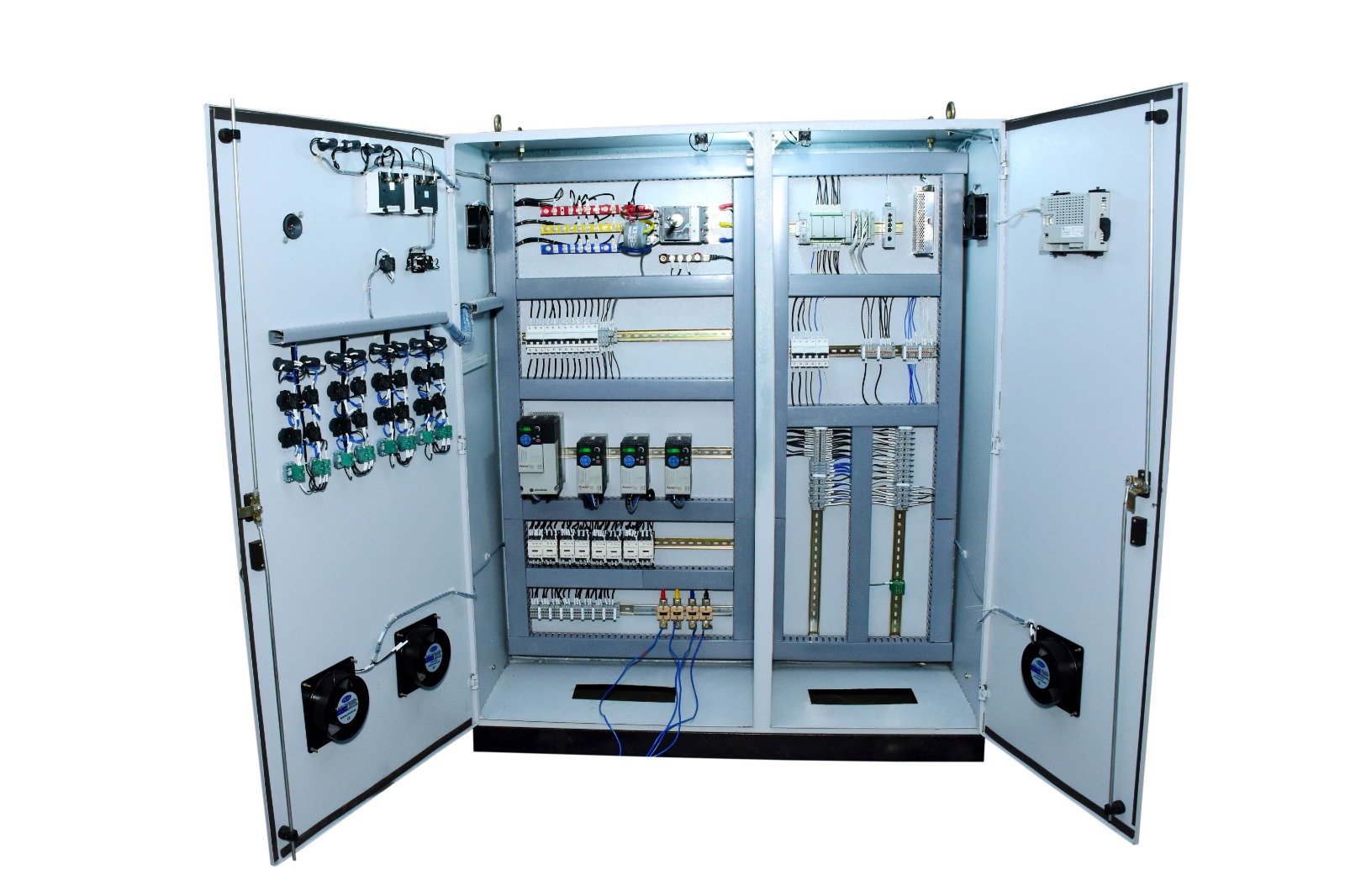
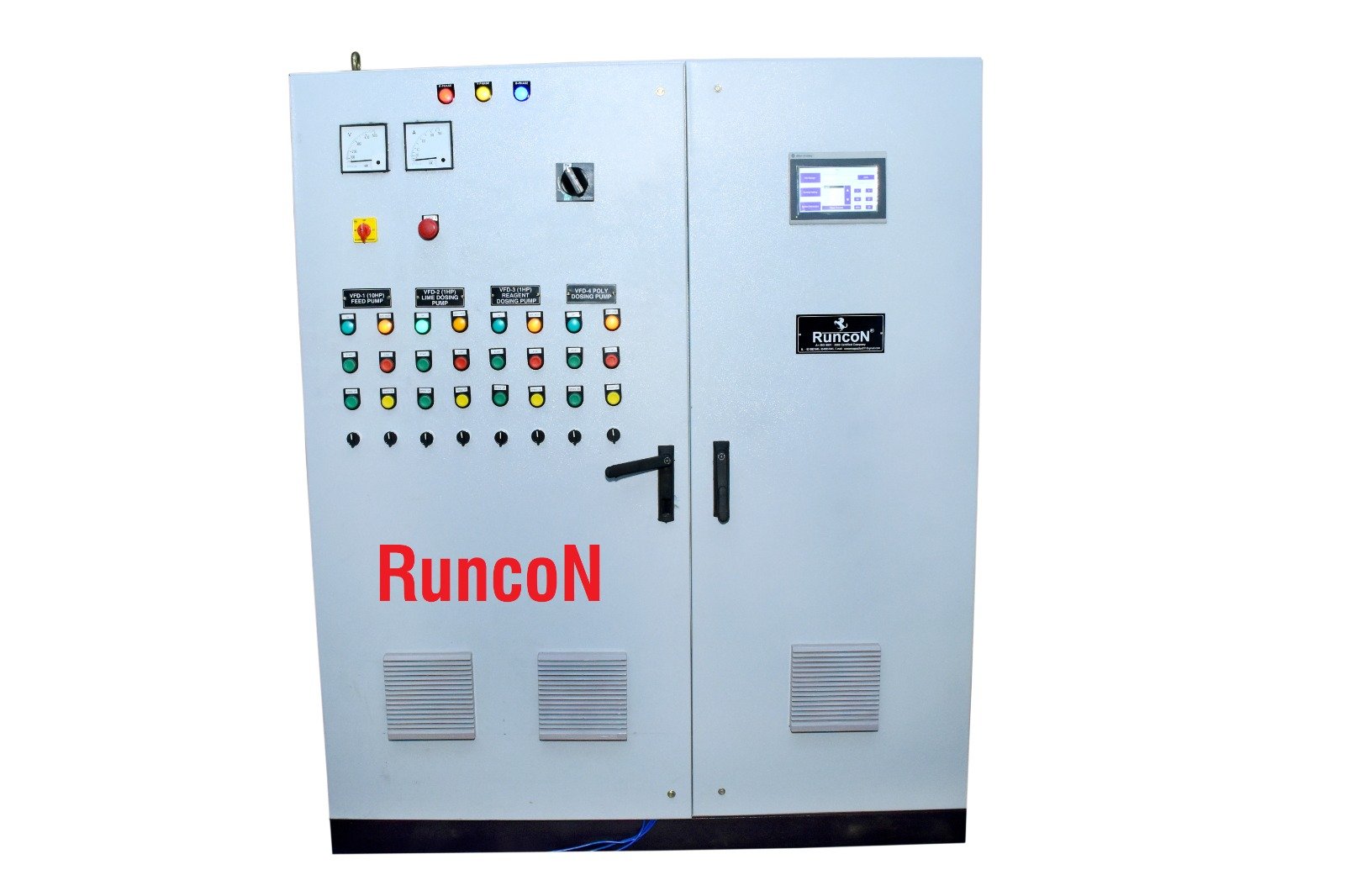
PLC PANEL
RuncoN PLC Panel (Programmable Logic Controller Panel) is an industrial control panel designed to house a PLC and associated components for automating processes in industrial and commercial settings. It serves as the central hub for controlling machinery, processes, and equipment by executing pre-programmed instructions.
Key Features of a PLC Panel
Centralized Automation:
-
Allows control and monitoring of multiple machines or processes.
Modularity:
-
Flexible to add or remove I/O (Input/Output) modules based on requirements.
Integration:
-
Can integrate with SCADA (Supervisory Control and Data Acquisition) systems for advanced monitoring.
Compact Design:
-
Houses all necessary components in a space-efficient enclosure.
Remote Access (Optional):
-
Advanced panels support remote programming and diagnostics.
Components of a PLC Panel
Programmable Logic Controller (PLC):
-
The brain of the system that processes input signals, executes the program, and generates outputs.
I/O Modules:
-
Input Modules: Receive signals from sensors, switches, etc.
-
Output Modules: Send signals to actuators, motors, solenoids, etc.
Power Supply:
-
Provides regulated power to the PLC and associated devices.
Communication Modules:
-
For data exchange with other systems via protocols like Modbus, Ethernet/IP, or Profibus.
HMI (Human-Machine Interface) (Optional):
-
A touch screen or display unit for operators to interact with the system.
Wiring Terminals:
-
Organize and connect field devices to the panel.
Circuit Protection Devices:
-
Includes MCBs (Miniature Circuit Breakers), fuses, and surge protection to safeguard the system.
Cooling System:
-
Fans or ventilation to prevent overheating.
Enclosure:
-
Often dustproof, waterproof, or explosion-proof, depending on the application.
Functions of a PLC Panel
Automation:
-
Executes programmed logic to control processes and equipment automatically.
Monitoring:
-
Collects and displays real-time data such as temperature, pressure, and speed.
Error Detection:
-
Identifies and responds to faults in processes or machinery.
Interfacing:
-
Serves as a bridge between field devices (sensors/actuators) and higher-level control systems.
Benefits of PLC Panels
High Reliability:
-
Designed to operate in harsh industrial environments with minimal downtime.
Flexibility:
-
Easily reprogrammed for new tasks or modifications.
Scalability:
-
Expandable to control additional devices as needed.
Cost-Effective:
-
Reduces manual labor and improves process efficiency.
Real-Time Control:
-
Quick response to inputs ensures precise control of processes.
Applications
Manufacturing Industries:
-
Assembly lines, robotic arms, and conveyor systems.
Process Industries:
-
Oil & gas, water treatment plants, and chemical processing.
Building Automation:
-
HVAC, lighting, and security systems.
Energy Sector:
-
Power generation and distribution.
Transportation:
-
Railway signaling and traffic management.
Types of PLC Panels
Compact Panels:
-
All components integrated into a single enclosure, ideal for small systems.
Modular Panels:
-
Components can be added or removed based on system requirements.
Distributed Panels:
-
Used in large-scale systems, with multiple panels distributed across different locations.